

Products
product
product
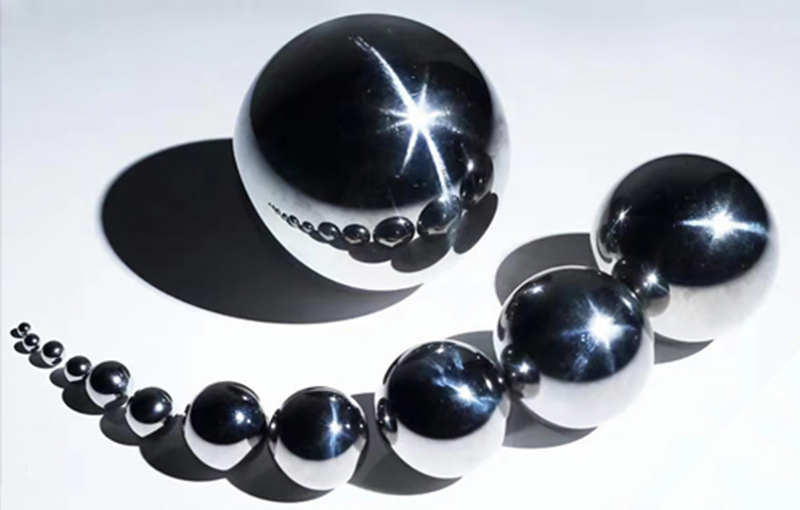
Due to the properties of steel, forged steel balls are superior to cast balls in all aspects. Cast balls primarily rely on their ferrochromium content to adjust their wear resistance. However, due to high power consumption, high ferrochromium prices, and severe environmental pollution, production costs are significantly increased. Forged steel balls with equivalent wear resistance are far less expensive than cast balls. Currently, many mines abroad are gradually switching to forged steel balls, which is advantageous. my country's grinding industry lagged behind other developed countries, resulting in slow updates of some technologies and materials. Some industries, particularly in the power generation and cement industries, still use mill technology and materials from the 1980s and 1990s. Currently, many large power plants in my country's power generation sector have gradually replaced their previous high-chromium steel balls with forged steel balls, and the wear loss is relatively similar. Overall grinding costs have decreased by 15-30% compared to cast balls. The majority of the alumina industry abroad has long switched to forged steel balls to reduce production costs. Forged steel balls are favored by users for their affordability, durability, and affordability. International giants such as Rio Tinto, BHP Billiton, and AngloGold all use forged steel balls. Forged steel balls of the same size are heavier than cast balls, which contributes to energy savings in ball mills. Forged steel balls are also heavier than cast balls, which contributes to maximum processing capacity and energy savings in ball mills.
Low-Chromium Balls vs. Forged Steel Balls
Wear Resistance: Compared to the cheapest 45# steel forged steel balls, low-chromium steel balls have a 15%-20% lower wear resistance.
Crush Rate: Low-chromium balls have a 3% crush rate, while forged balls have a 1% crush rate.
Price: Low-chromium steel balls are priced similarly to 45# forged alloy steel balls.
Medium-Chromium Balls vs. Forged Steel Balls
Wear Resistance: Compared to forged steel balls made of 60MN steel, medium-chromium steel balls have essentially the same wear resistance.
Broken Rate: Medium chromium balls have a much higher breakage rate than low-chromium and high-chromium balls due to their unstable metallographic structure at the center due to their internal elemental composition. However, forged balls have a breakage rate of ≤1%.
Price: Medium chromium balls are 8-10% more expensive than 60MN steel balls.
High chromium balls vs. forged steel balls
Wear Resistance: Compared to cast high-chromium balls with a chromium content of 13-17 ppm, the wear resistance of B2 and B2B forged steel balls is 5%-10% lower.
Breakage Rate: High-chromium balls have a breakage rate of 3%, while forged balls have a breakage rate of 1%.
Price: Forged B2 steel balls cost approximately 5,200 RMB (including tax) ex-factory, while cast high-chromium balls with a chromium content of 13-16 ppm cost approximately 6,300-6,400 RMB, a difference of approximately 1,000-1,100 RMB per ton.
Grinding Cost:
B2 steel balls wear approximately 0.8 kg/ton of iron ore fines, resulting in a grinding cost of 4.16 yuan per ton of iron ore fines.
If you would like to know more, please contact us at +86 18865261666
If you want more understanding, please contact us.

 WeChat